Visar inlägg med etikett Reports. Visa alla inlägg
söndag 3 juli 2011
Ice cream close-ups from the Kindergarten
Kindergarten Intervention - Performance workshop
This friday we visited a Kindergarten in Kålltorp.
With the assistance of three fantastic girls, age 4-5, we worked and discovered more about food in the context of children and imagination.
First we talked a bit. Asked questions like: What is food? What is your favorite food? Do you know what your grandmother ate when she was young? Why are we eating?
Then, as a warm-up for the senses, we invited the girls to smell at a bottle of vinegar, taste a bit japanese seagrass and cross an egg with their bare hands.
How does an anchovy feel?
Slippery! Like your hands are going away!
Table set for two tasks. First: Make a dish that you think tastes like happiness.
But it actually more turned out to be the working process that was happy instead of the final dishes.
Some of the results:
![]() |
![]() Task number two: Make a self portrait in ice cream! ![]() |
Hedvig is trying Popping Candy! A powder with the taste of strawberry that pops in your mouth when you eat it. She is holding her ears so the sound of popping becomes more clear.
Some of the self portraits:
And as a grand finale: EAT!
torsdag 30 juni 2011
Third Week: INTUITION - Impromptu workshop with Evren Uzer
Questions about food written on the bottom of the soup bowl
We had a workshop organized by Evren Uzer. In the workshop, we wrote down any food related questions on the bottom of the pottery soup bowls.
We used pottery paint to write down questions and burned them in the oven.
The soup we cooked was classic Swedish peasoup, eaten traditionally on Thursdays. Also we made pancakes to eat with blueberry jam as a dessert.
We made more than 10 bowls with questions. When one would finish their soup the question appeared.
Those questions were:
1. What makes good dinner memorable?
2. When was the last time you had a heated argument while eating?
3. What is the good food for your soul?
4. What is the spice of happiness?
5. What does good friendship taste like?
Each person jotted down thoughts on the paper set under the bowl by using a pen set next to the knife. The questions brought us an exciting discussion about food and eating from several aspects.
tisdag 28 juni 2011
Third Week: INTUITION - Workshop with Evren Uzer
Making Meze and talking.
Three forms of eggplant and one dish from the Ottoman royal court.
I asked Evren to come and cook with us, and at the same time giving a “lecture” or rather a talk about different social experiments concerning food and social behaviour, alternative ways of living and such. The workshop, talking and cooking went by perfectly.
Fredric
Four eggplant dishes from commoners kitchens.
Patlican salatasi (Turkey) / Moutabal (Lebanon)
1 large eggplant, pricked all over with a fork
1 garlic cloves
3/4 teaspoon salt
1/4 cup fresh squeezed lemon juice
1/4 cup tahini
for garnish: olive oil, chopped parsley, red pepper flakes, pomegranate seeds, etc.
Preheat a grill or preheat the oven to 250 C and roast the eggplant for 40-45 minutes, until the skins are black and the flesh is soft and collapsed.
Meanwhile, smash the garlic with the salt in a mortar and pestle until paste-like. In a large bowl, whisk together the lemon juice and tahini until thick and lighter in color. Add the garlic paste.
When the roast eggplants are cool enough to handle, split them in half and scoop out the soft flesh. Puree the eggplant flesh in a food processor until smooth.
Add the eggplant puree to the garlic/tahini mixture. Taste for seasoning. Allow to rest until cool.
To serve, spread in a platter and drizzle with olive oil and any of your desired toppings.
1 large eggplant, pricked all over with a fork
1 garlic cloves
3/4 teaspoon salt
1/4 cup fresh squeezed lemon juice
1/4 cup tahini
for garnish: olive oil, chopped parsley, red pepper flakes, pomegranate seeds, etc.
Preheat a grill or preheat the oven to 250 C and roast the eggplant for 40-45 minutes, until the skins are black and the flesh is soft and collapsed.
Meanwhile, smash the garlic with the salt in a mortar and pestle until paste-like. In a large bowl, whisk together the lemon juice and tahini until thick and lighter in color. Add the garlic paste.
When the roast eggplants are cool enough to handle, split them in half and scoop out the soft flesh. Puree the eggplant flesh in a food processor until smooth.
Add the eggplant puree to the garlic/tahini mixture. Taste for seasoning. Allow to rest until cool.
To serve, spread in a platter and drizzle with olive oil and any of your desired toppings.
1 large eggplant
1/2 cup of extra virgin olive oil
4 teaspoons of wine vinegar
3 cloves of garlic, minced
sea salt
freshly ground pepperPierce the eggplant with a fork and char on the grill, or over an open flame (alternatively, broil for 10-15 minutes) until the eggplant turns black and is very soft. Set to cool and drain on a rack with paper towels underneath.
As soon as it can be handled, peel by hand (the skin will come off easily), and transfer to a bowl. Chop the pulp into small pieces with a knife, and mash with a fork. With a wooden spoon, stir in oil and vinegar slowly, alternating between them, until well blended. Stir in garlic, salt, and pepper.
Kyopolou (Bulgaria)
1 aubergines
1 red bell peppers
1 green bell pepper
1 medium sized tomatoe
2 cloves garlic,
fresh parsley
1 tablespoons red wine vinegar
olive oil
saltBake the aubergines, tomatoes and peppers in the oven for about 40 minutes at 220C until the skins are pretty burned / Peel their skin and cut into small pieces.
add the crushed garlic./ Mix well and add the olive oil and vinegar, and salt to taste
serve cold and sprinkle some parsley on top
g:aubergine (Goteborg)
localize your eggplant salad with Goteborg ingredients!
Ingredients
1 eggplant
......
.....
An example from Ottoman Court Food
Mahmuddiye*
This dish is a classical period Ottoman Court Food from 15th -16th Century. Risoni is a replacement from a similar rice product.
Ingredients:
30 grs + 30 grs butter
150 gr non salted almonds
1 kg chicken
10 sun dried apricots, julienne cut (or 15 fresh apricots)
3 tablespoons of razaki grape (replaced w 1 ts raisins)
2 tablespoons of honey
2 cups of risoni
salt
salt
optional**: 1/2 teaspoon of powdered cinnamon
1/2 teaspoon of ground black pepper
1 tablespoon of lemon juice
Split the chicken into four pieces and cover with water, sprinkle salt and start to boil.
Put the almonds in hot water for 15 min, then peel of the skin and split into half.
Put apricots in lukewarm water (if you use fresh ones you don't need to) then cut in julienne.
When the chicken is boiled, take the boiling water out (keep on the side for using later) and separate the bones of the chicken and pull the chicken into shreds.
Put for cups of chicken's boiling water in a pot add, honey, grape, raisins, almonds and apricots and heat to boil. (optional: take a cup of this sweet mixture to add to the chicken pan later)
At a medium size pan, heat the butter and sautee risoni.
When sauteed, add risoni to the pot together with some salt, cook until it boils down.
After it boils down let the risoni pilav rest for 15 min.
Place the chicken pieces on top of the pilav.
My addition: sautee the chicken pieces in a piece of butter and the sweet mixture you have spared earlier from honey, apricot, almond and raisin mixture.
*It is possible to access some other versions of this recipe but I used the one that is closest to the original which is from the book by Marianna Yerasimos where she took from Sirvani (Marianna Yerasimos, (2007) 500 Years of Ottoman Cuisine, Boyut Publishing: Istanbul, p:93)
** these ingredients were common at some of the other versions, which doesn't seem to out of place. Use your intuitions and feel free to experiment with these and more!
Evren Uzer
måndag 27 juni 2011
Third Week: INTUITION - Jonas Dahlin, Fine Dining Chef
Tasting
Serving, tasting
Talking, showing
Season desert
Listening, watching
Concentrating
Showing
Lecture and talk by the chef Jonas Dahlin about conceptual food. In the morning, we had a lecture about concepts of modern Swedish food. His take on modern Swedish food, focused more on seasonal vegetables suited to the modern life in Sweden.
After that, we cooked divided into four groups.
Group 1: Tasting
Group 2: Texture
Group 3: Stages of cooking
Group 4: Seasonality
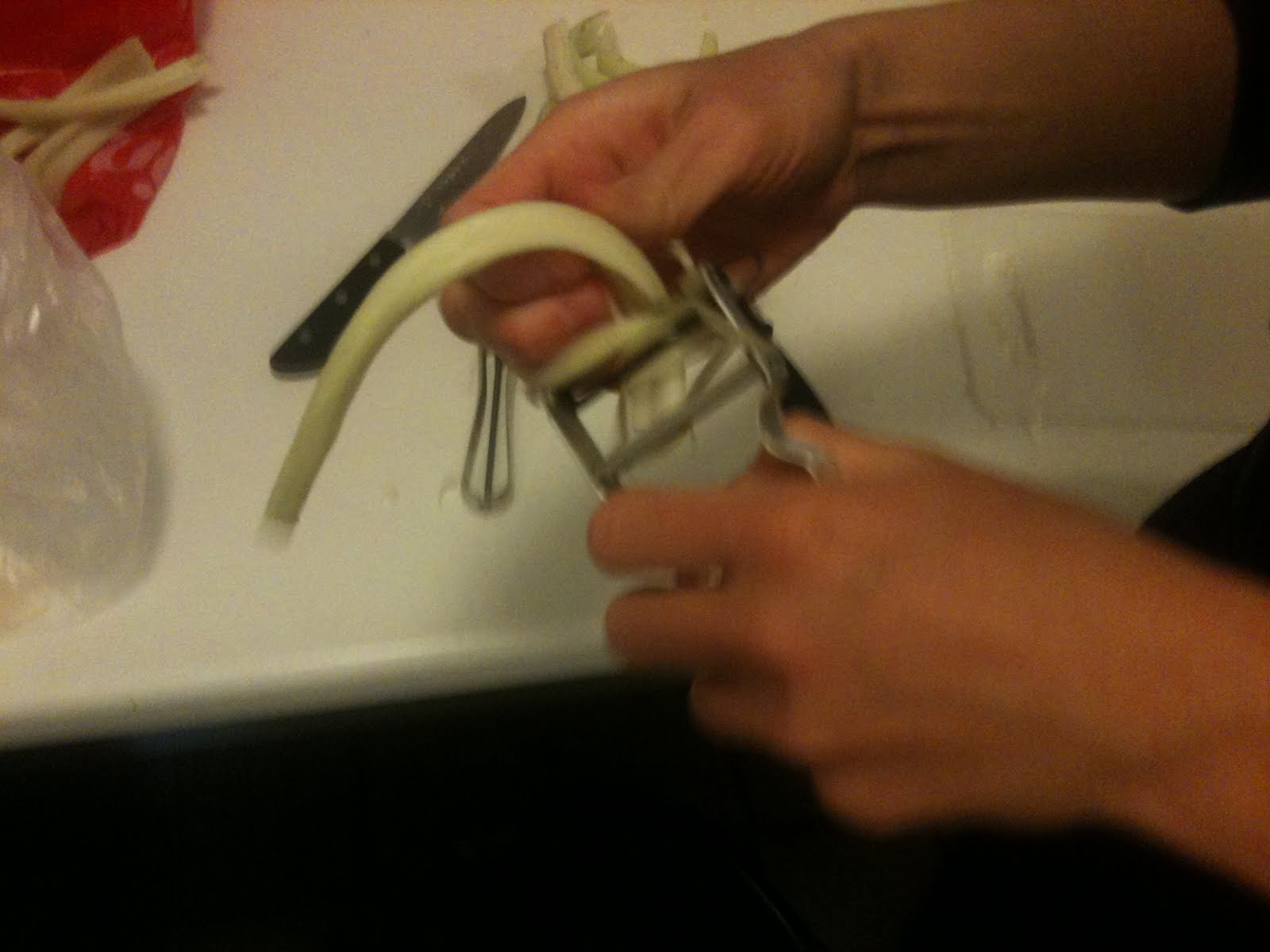
Group 1made the seasoning with leak and cucumber. By burning the skin of two vegetables, two different spices ware created. Those spices gave a taste of cooked with mild bitterness.
Group 2 made several different dishes in different ways out of cauliflower. Five factors of the taste were used: Sweetness, saltiness, sourness, bitterness and umami constituted the taste of those dishes
Group 3 made pickles from different part of the cucumber in different shapes. One taste was Swedish vinegar made from potato and sugar. The other taste was white wine vinegar and salt.
Group 4 made the dessert by seasonal produce. Sweet sauce scented by elderflower was mixed with strawberries and rhubarb. We tasted with fresh cream.
All the plates were made of unexpected parts from vegetables and fruits, and were surprisingly tasty. The creative experiment with Jonas Dahlin let us consider about the concept of food, eating and tasting.
After that, we watched an episode of Heston Blumenthal's tv-show "Heston's Feasts" and discussed the differences between their respective culinary styles.
We got reference book titles from Jonas Dahlin. That inspired us in the way to combine food and art.
Heston's Fantastical Feasts by Heston Blumenthal
Essential Cuisine by Michel Bras
Le Calandre by Missimiliano Alajmo and Raffaele Alajmo
El Bulli by Ferran Adria, Juli Soler, Albert Adria
Prenumerera på:
Inlägg (Atom)